
The Drowning of the Minotaur
$35.00
The Drowning of the Minotaur
$35.00
Bring Carlos Quinto Kemm’s vision into your space with a Duende’s Lair poster, printed on premium Fuji Pearl Photo Paper for exceptional depth and luminosity. This professional-grade paper enhances contrast, sharpens detail, and adds a subtle metallic sheen that makes colors glow and highlights shimmer. The result is a striking, gallery-quality print that captures the texture, layering, and richness of the original artwork—ready to elevate any wall with bold character and timeless presence.
Share Art With Your Friends & Family
Description
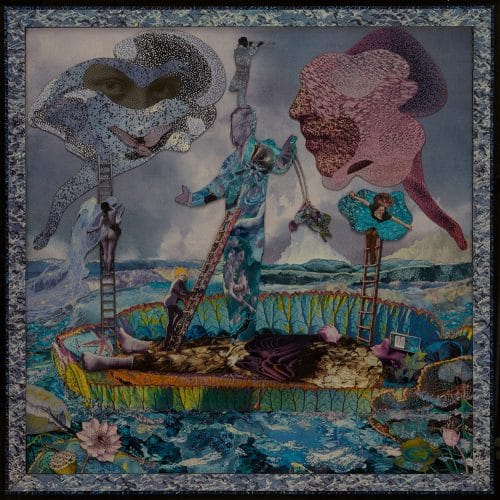
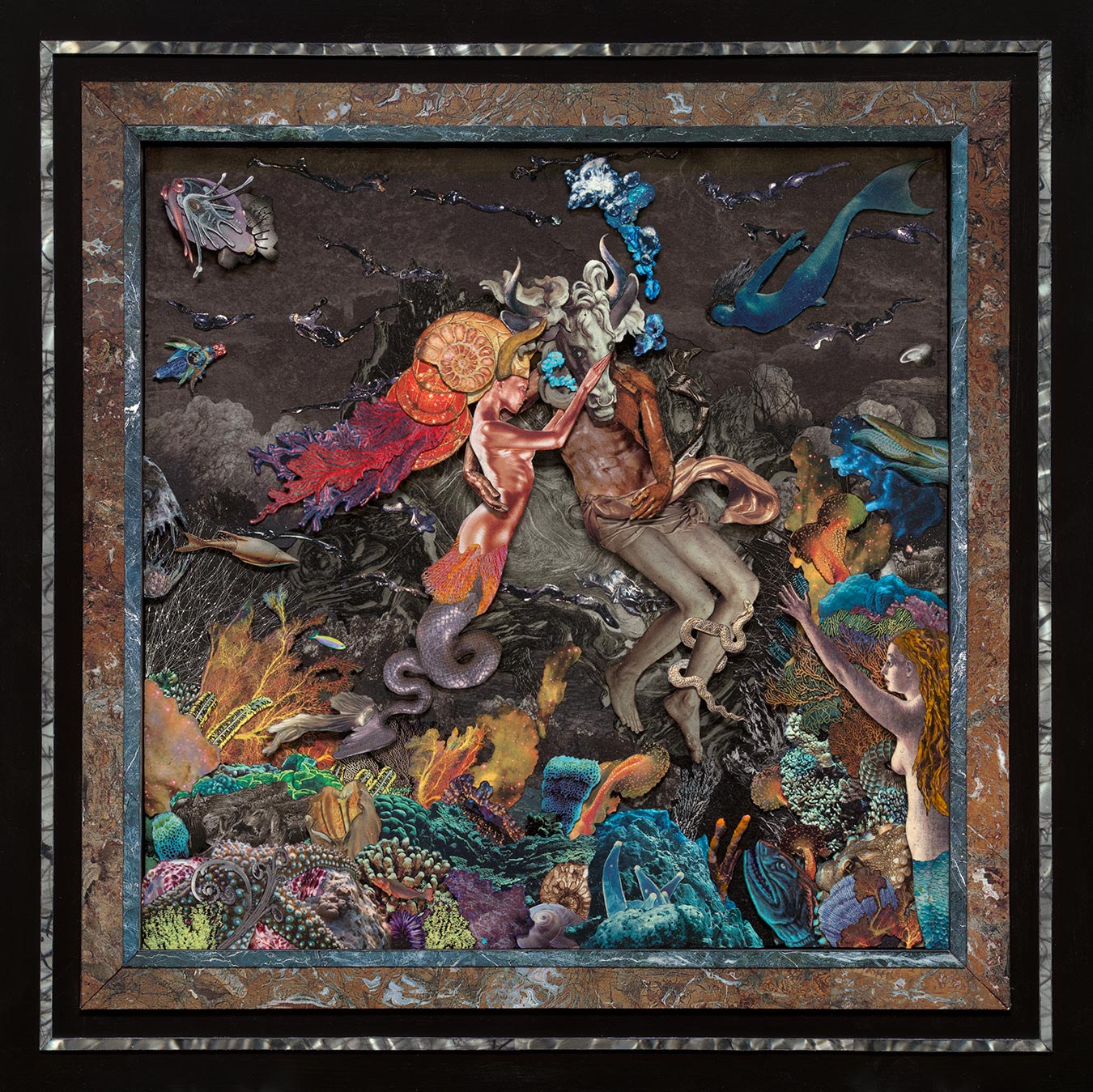
Carlos Quinto Kemm’s “The Drowning of the Minotaur” is a mesmerizing blend of mythology, religious iconography, and surrealism, transforming the well-known Greek legend into a tragic and poetic meditation on fate. At the heart of the composition, the Minotaur, no longer the monstrous brute of Crete, appears in a state of surrender, his body sinking into the abyss. But this is no ordinary depiction of the beast—his form is directly taken from two of Michelangelo’s Pietà sculptures, fusing the mythological with the divine.
The Vatican Pietà (1498–1499) and the Rondanini Pietà (1552–1564) serve as the foundation for the Minotaur’s body, reimagining him in the pose of Christ at the moment of lamentation. His limbs hang limp, echoing Michelangelo’s vision of sacrifice and suffering. Yet, unlike Christ, the Minotaur is not cradled by the Virgin Mary. Instead, an enigmatic mermaid-like figure clings to him, her expression ambiguous—does she mourn him as a lost soul, or is she the very force that has lured him into the depths? In this haunting embrace, she becomes both a Madonna and a siren, offering comfort or sealing his fate.
The use of Michelangelo’s Pietà imagery elevates the Minotaur from a mere beast to a martyr of his own story. The unfinished quality of the Rondanini Pietà, in particular, lends an eerie sense of fragmentation, reinforcing the Minotaur’s duality—caught between man and beast, hero and monster, victim and villain. As he drowns, it is not just his body that is consumed, but his very identity, dissolving into the abyss much like the lost souls of the underworld.
Surrounding this central tragedy, the ocean swirls with life and decay. Strange aquatic creatures watch from the shadows, while corals, flames, and shipwrecked remnants suggest an underwater labyrinth where the Minotaur meets his final judgment. To the right, a golden-haired woman reaches toward him, her sorrowful gesture reminiscent of classical mourning figures. Is she Ariadne, the princess who once guided Theseus? Or is she another lost soul, witnessing the inevitable fall of a creature doomed by its very existence?
By merging Renaissance religious themes with Greek mythology, Kemm breathes new life into the Minotaur’s legend. No longer just a monster to be slain, he becomes a tragic figure—his suffering etched in the borrowed forms of Michelangelo’s greatest works, his fate sealed not by a sword, but by the slow, inescapable embrace of the deep.
For Your Consideration