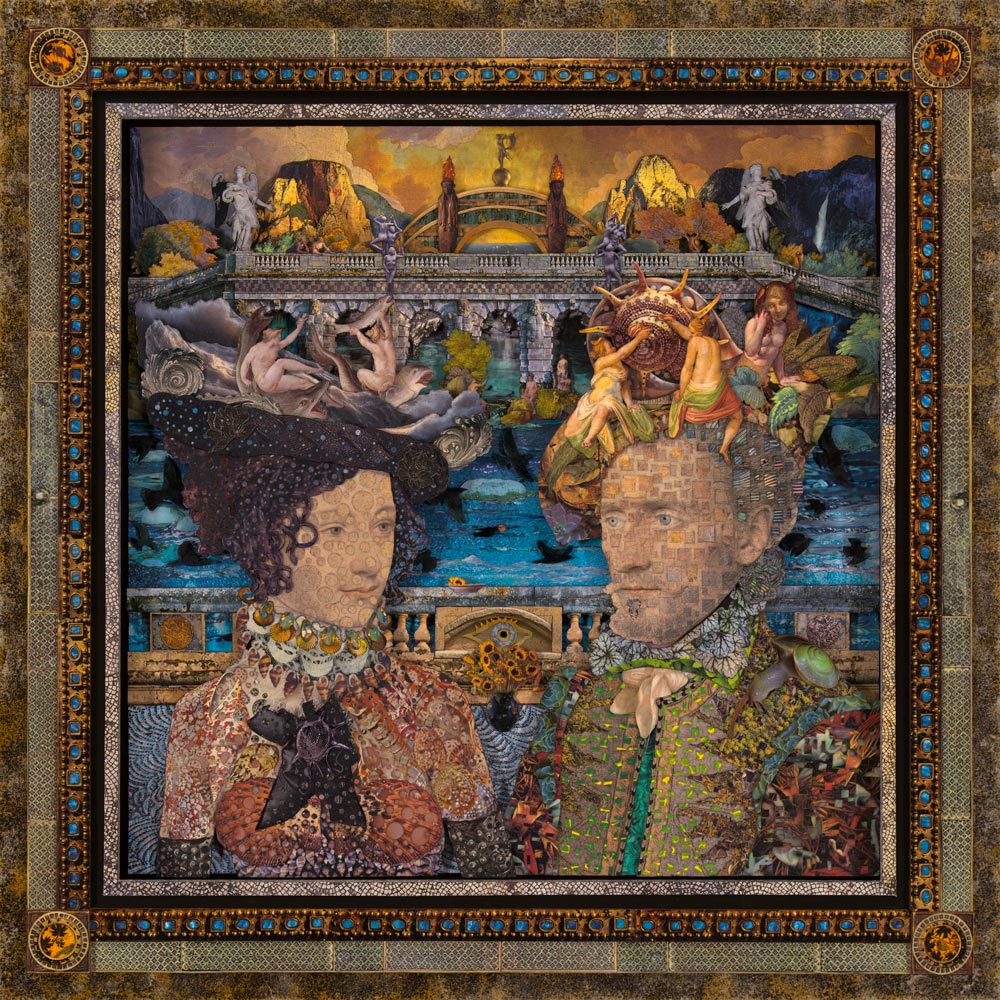
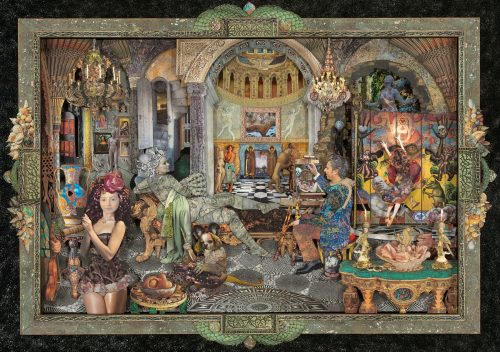
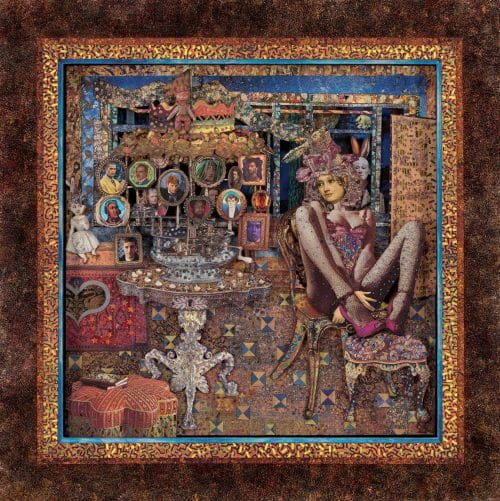
Carlos Quinto Kemm’s La Dolce Vita is a gilded, deeply symbolic composition that seduces with its opulence while quietly unraveling the myths it appears to celebrate. Named after Fellini’s iconic 1960 film, the piece becomes less a tribute to indulgence and more a visually layered critique of beauty, nostalgia, and the rituals of appearance.
At the center, two archetypal figures—one feminine, one masculine—stand adorned in elemental symbolism. The woman’s sea-formed hat evokes the element of water, curling with coral and wave-like crests. Her gown is composed of seashells and pearls, drawing on Venusian mythology to represent an idealized, mythic femininity. Her male counterpart is clothed in foliage and bark-like textures, with a snail-woman hybrid nestled in his crown, aligning him with earth, time, and organic decay. Their garments are not just costumes—they are constructed mythologies.
Behind them stretches a monumental stone bridge, populated with reclining nymphs, angels, and classical figures, frozen in gestures of sensuality and ceremony. At its center, two red-robed guardians flank an arched portal, while above, golden peaks glow like theatrical backdrops. Below, black birds drift across water, and semi-submerged figures rise or fall—suggesting a blurred boundary between myth and lived experience.
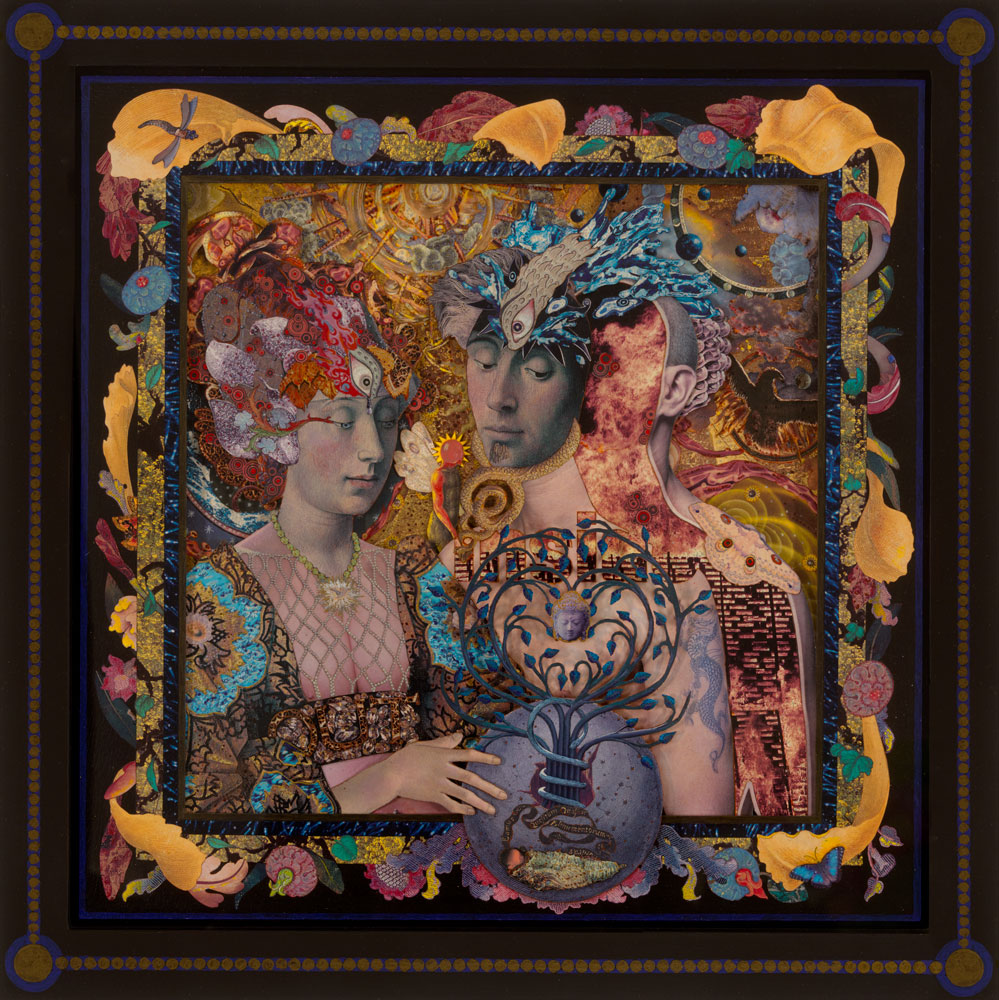
The entire composition is encased in an ornate, jewel-studded frame, more reliquary than border. It elevates the piece to the status of sacred object while simultaneously enclosing it, suggesting that this dolce vita—the sweet life—is a curated fantasy, a decorative performance, a golden cage.
Rather than glorify decadence, Kemm exposes it—offering a requiem for civility, romance, and empire in decline. La Dolce Vita is both breathtaking and mournful, theatrical and tender. Through its lush textures and layered references, it invites the viewer to consider what lies beneath the surface of beauty, and what remains after the performance ends.